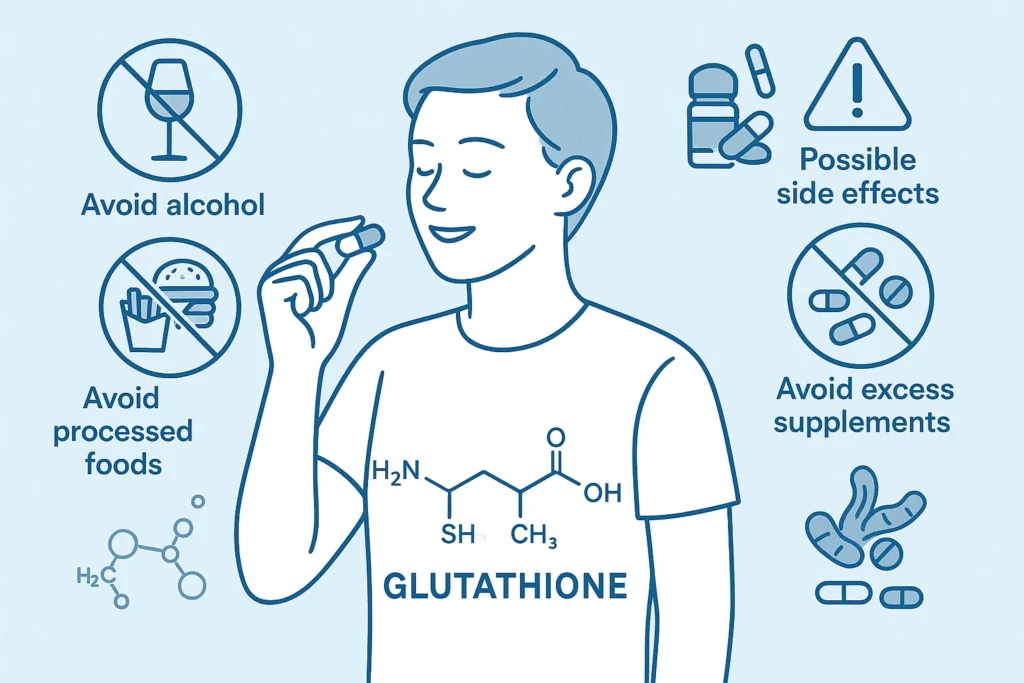
Important Tips & Side Effects to Know
Glutathione is one of the most important antioxidants your body produces, and many people take supplements to support immunity, detoxification, energy, and overall wellness. But like any supplement, it’s helpful to know what to avoid when taking glutathione so you get the best results with minimal issues.
In this guide, we’ll walk through what to avoid, common mistakes people make, and what you should know about glutathione side effects — especially if you’re new to supplementing.
Avoid Taking Glutathione With Poor-Quality Supplements
Not all glutathione products work the same. Some break down in the stomach before they can be absorbed, while others contain fillers that may cause reactions.
Avoid supplements that:
- Contain artificial colors and unnecessary additives
- Do not list clinical research or proven bioavailability
- Use extremely low doses with no measurable benefit
High-quality supplements or precursors dramatically reduce the chance of glutathione side effects.
Avoid High-Sugar or Processed Foods Around Your Dose
Your body relies on glutathione to help detoxify chemicals, preservatives, and processed ingredients. Eating heavy, sugary, or highly processed meals right before taking glutathione may reduce its effectiveness.
For best results:
Take on an empty stomach or between meals
Pair with clean, nutrient-rich foods
Increase hydration
Avoid Excess Alcohol Consumption
Alcohol places extra strain on the liver — the same organ that depends on glutathione for detoxification. Drinking heavily while taking glutathione can reduce its benefits and increase its workload.
Moderation helps your supplement perform at its best.
Avoid Taking Too Many Antioxidants at the Same Time
Vitamin C works with glutathione — but taking them at the exact same moment can interfere with absorption for some people.
More is not always better. Taking multiple antioxidant supplements together (like NAC, Vitamin C, glutathione, and others) may overwhelm the system or reduce absorption.
Space your supplements throughout the day unless your healthcare professional advises otherwise.
Avoid Expecting Instant Results
Glutathione works at the cellular level, which takes time. Many benefits — such as improved energy, brighter skin, or better recovery — show gradually as levels normalize in the body.
Consistency > speed.
Understanding Glutathione Side Effects
Glutathione is naturally produced in your body, so most people tolerate it extremely well. However, a small percentage may experience mild glutathione side effects, usually temporary and related to detox activity.
Possible side effects can include:
Mild stomach discomfort
Bloating
Headache
Temporary fatigue
Skin detox reactions (rare)
These effects typically resolve as the body adjusts.
Why Side Effects May Happen
If your body is eliminating toxins more quickly, you may feel temporary detox symptoms. Increasing water intake and reducing processed foods often helps.
Who Should Be More Cautious
Consult a healthcare provider if you are:
Pregnant or breastfeeding
Managing chronic medical conditions
Taking prescription medications
Receiving chemotherapy
For most people, glutathione is very well tolerated — especially when taken in high-quality, research-backed formulas.
Final Thoughts
Knowing what to avoid when taking glutathione can help you get the best results with the least amount of discomfort. By choosing a quality supplement, avoiding processed foods and excessive alcohol, and spacing out other antioxidants, you support your body’s natural ability to thrive.
And while glutathione side effects are generally mild and uncommon, it’s still good to understand them—so you can supplement confidently and safely.
Supporting glutathione levels is one of the most powerful steps you can take for energy, immunity, and long-term health.